How to Prepare Your Body for Endometriosis Surgery
To prepare for endometriosis surgery, run a 6-week sequence: anti-inflammatory nutrition (weeks 6–4), bleeding-risk supplement taper (by week 2), and daily pelvic floor down-training plus nervous system regulation throughout — then handle logistics in the final week. A 2025 meta-analysis of 20 RCTs in 2,376 patients found psychological prehabilitation alone reduced average hospital length of stay by 1.6 days and significantly lowered postoperative pain, anxiety, and depression. The framework below is the same Endo Recovery Protocol pre-op sequence we use with our patients.
You’ve been living with the bloating, the fatigue, the pain that steals entire days from your life — and now you finally have a surgery date on the calendar. Whether what you feel is relief, fear, or both, what you do in the next six weeks will shape how you heal on the other side of it.

Why Does Pre-Surgery Preparation Matter for Endometriosis?
Enhanced Recovery After Surgery (ERAS) protocols in gynecologic surgery cut average hospital length of stay by close to two days and reduced complications by roughly a third in a 2021 meta-analysis of 27 studies. That is the difference between recovering at home with a heating pad and recovering in a hospital room with an IV.
The four to six weeks surrounding surgery — the perioperative window — is now recognized as a critical period that influences not only how you feel after surgery, but whether endometriosis-related symptoms come back. Endometriosis is a chronic inflammatory and systemic disease, so prep cannot stop at the pantry. It has to address inflammation, gut health, pelvic floor tension, and your nervous system in parallel.
What most blogs miss: generic “rest and eat well” advice treats endometriosis surgery like a routine procedure. It is not. A meaningful share of patients still report persistent pain in the year or two after excision, and centralized pain, pelvic floor dysfunction, and adhesions are major drivers — all influenced by what you do before you ever reach the operating room.
What Should You Eat Before Endometriosis Surgery?
A 2024 GRADE-assessed systematic review and meta-analysis of randomized controlled trials found that anti-inflammatory dietary supplementation produced a significant decrease in pelvic pain in women with endometriosis. The goal is not a crash diet — it is shifting your plate gradually, over four to six weeks, toward foods that cool inflammation rather than feed it.
Anti-inflammatory eating
Build the bulk of your plate from fatty fish (salmon, sardines), colorful vegetables, berries, leafy greens, nuts, seeds, and olive oil. These foods supply the omega-3s, polyphenols, and vitamins C, D, and E your body needs for inflammatory regulation and tissue repair. Reach for the rainbow; this is not the time for beige food.
Gut support
A substantial share of women with endometriosis report gastrointestinal symptoms — bloating, constipation, or diarrhea — and a 2022 systematic review and meta-analysis found women with endo had nearly three times the odds of meeting IBS criteria (pooled prevalence 23.4%, OR 2.97). Anesthesia and post-op opioids slow your gut down further, so you want to walk in with as much GI resilience as possible. Add probiotic-rich foods (plain yogurt, sauerkraut, kimchi) and prebiotic fiber (cooked-and-cooled potatoes, oats, bananas) starting four to six weeks out. If you know certain foods set off a flare, a short low-FODMAP trial can stabilize digestion before opioids arrive.
Foods and drinks to avoid
In the two to four weeks before surgery, reduce processed foods, added sugar, alcohol, and red meat — they raise systemic inflammation and worsen insulin resistance, both of which impair wound healing. The old “nothing by mouth after midnight” rule is also out: American Society of Anesthesiologists guidelines now allow clear liquids up to two hours before surgery, and ERAS protocols use a carbohydrate-rich clear drink the night before and a smaller dose two to three hours before incision to reduce post-op insulin resistance. If your surgeon does not already use a carb-loading protocol, it is worth asking why not.
Can I drink alcohol before endometriosis surgery?
Stop alcohol at least 48 hours before surgery — and ideally cut back two to four weeks out. Alcohol thins the blood, raises systemic inflammation, dehydrates tissue (which slows wound healing), and interacts with anesthesia drugs. Heavy drinkers should disclose intake honestly to the anesthesia team because alcohol withdrawal during recovery is a real and avoidable complication.
What Supplements Should You Stop Before Endometriosis Surgery?
The Society for Perioperative Assessment and Quality Improvement (SPAQI) 2020 consensus statement recommends discontinuing the following supplements at least two weeks before surgery because of bleeding risk: turmeric, curcumin, ginkgo, ginseng, garlic supplements, feverfew, ginger supplements, high-dose vitamin E, and resveratrol. The American Society of Anesthesiologists similarly recommends stopping herbal medications one to two weeks before elective surgery — and notes that 50–70% of surgical patients fail to disclose supplement use to their physicians.
Supplements to stop before surgery
Pull out every bottle on your shelf and check it against that list — including immune-support gummies and “women’s hormone balance” blends, which often hide ginseng, turmeric, or vitex. Photograph all of them and bring the photos to your pre-op visit.
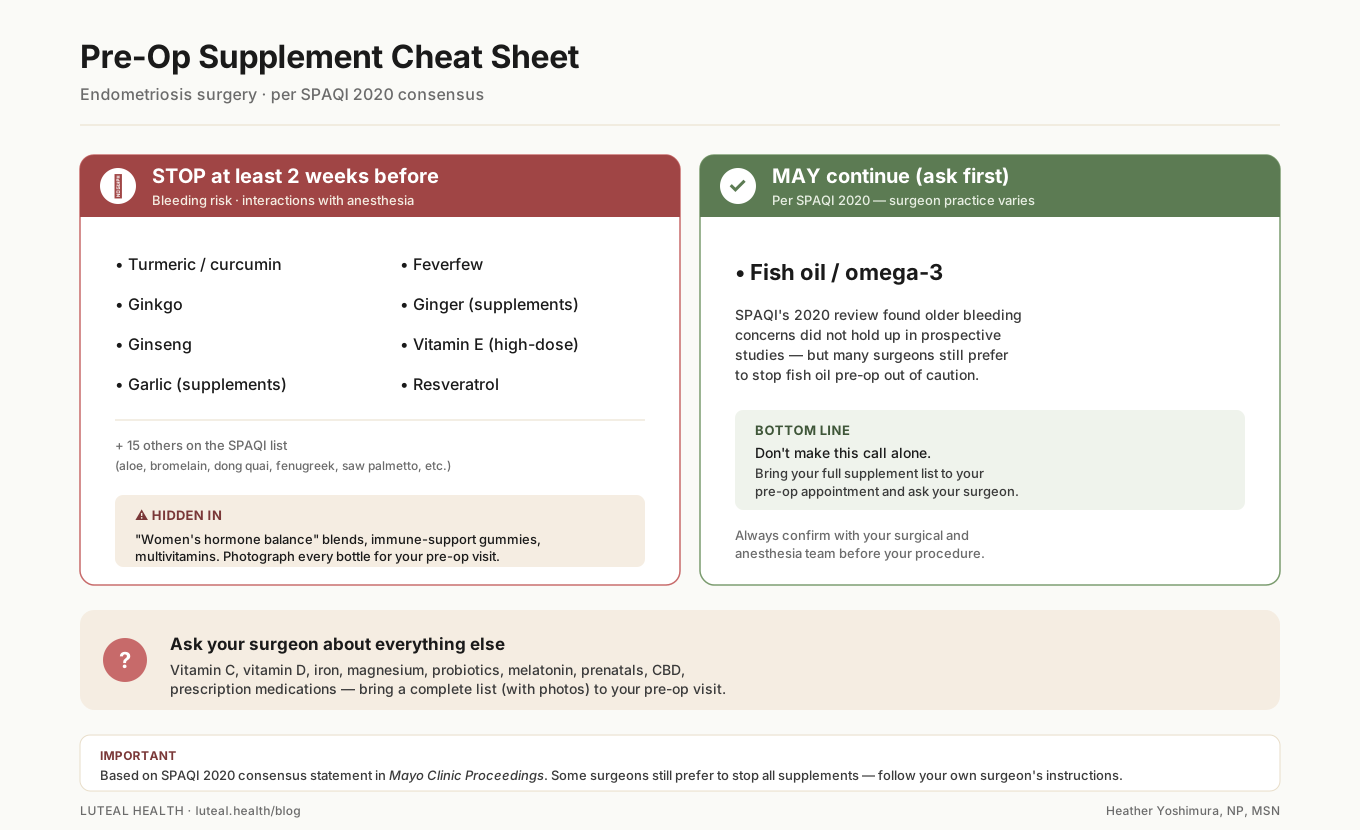
What other blogs get wrong: many lists tell you to stop fish oil two weeks before surgery. SPAQI’s 2020 consensus actually recommends continuing fish oil and other omega-3 preparations — prior concerns about bleeding risk have not held up in prospective studies, and a large randomized trial actually found fewer transfusions in the fish oil group. That said, surgeon preference still varies, so ask yours directly.
Supplements that may support healing
After clearing it with your surgical team, certain nutrients may support tissue repair: vitamin C for collagen synthesis, vitamin D (deficiency is common in women with endo) for immune function, and iron if you have a history of heavy menstrual bleeding. Lead with food, fill in gaps with supplementation guided by lab work, and bring a written supplement list to your pre-op appointment.
Should I stop birth control before endometriosis surgery?
Probably not — but ask your surgeon directly, because the answer depends on your hormonal regimen and your surgeon’s protocol. Most laparoscopic excision surgeries do not require stopping combined oral contraceptives, hormonal IUDs, or progestin-only options, and many surgeons prefer patients stay on suppression to keep lesions quieter at the time of surgery. Some practices ask patients on combined estrogen-containing pills to switch to progestin-only or pause briefly because of theoretical clot risk with anesthesia and immobility. This is one of the most worth-asking questions in your pre-op appointment.
How Should You Prepare Your Pelvic Floor Before Surgery?
A 2025 randomized controlled trial in the Journal of Physiotherapy found that supervised exercise plus pelvic floor muscle training improved current pelvic and genital pain in women with endometriosis, with benefits maintained at 12 months. In a separate 2023 cross-sectional study of 92 women with endo, 75% had elevated pelvic floor muscle tone and 50.4% had impaired pelvic floor relaxation — clinical findings far more common than most patients realize.
The insight most articles skip: pre-op pelvic floor work is not about “getting in shape.” It is about teaching your pelvic floor to relax, not just contract. Walking into surgery with a guarded, high-tone pelvic floor — extremely common with endo — makes post-op pain harder, voiding slower, and bowel recovery drag. A pelvic floor physical therapist can assess your baseline and teach down-training (diaphragmatic breathing, reverse Kegels, internal release work) in the four to six weeks before your procedure. Gentle walking, hip-opening stretches, and breathwork round out a realistic pre-op movement plan.
How Do You Prepare Mentally for Endometriosis Surgery?
The 2025 meta-analysis cited at the top of this post — 20 RCTs, 2,376 patients — found that psychological prehabilitation reduced postoperative length of stay by an average of 1.6 days and produced significant improvements in pain, anxiety, and depression after surgery. Your nervous system is not separate from your surgical outcome; it is part of it.
Nervous system regulation
Practice these daily in the weeks before surgery: diaphragmatic (belly) breathing for five minutes twice a day, progressive muscle relaxation, a guided meditation or body scan before bed, and brief journaling for fears and expectations. The goal is not to eliminate anxiety — it is to build a regulated baseline you can return to in pre-op holding.
Setting recovery expectations
Recovery from laparoscopic excision typically takes one to two weeks for desk-based work and four to six weeks for physically demanding jobs, though this varies with the extent of disease removed. The single biggest source of post-op anxiety I see in practice is patients comparing themselves to a curve that does not exist — uncertainty itself is a stressor, so know the range in advance.
What Should You Do the Week Before Endometriosis Surgery?
In the final seven to ten days, the work shifts from physiology to logistics. The point is to remove every decision your post-op self will not want to make.
- Prepare 7–10 days of easy meals (soups, smoothie ingredients, batch-cooked grains and proteins)
- Set up a recovery station with pillows, heating pad, phone charger, water bottle, and prescribed medications within arm’s reach
- Arrange transportation to and from the surgical center (you cannot drive yourself home)
- Confirm your time off work in writing
- Fill prescriptions in advance — stool softeners and pain medications, typically
- Wash bedding, do laundry, and move frequently used items to waist height so you are not bending or reaching during the first two weeks
- Pack a hospital bag even for an outpatient procedure: loose pants, slip-on shoes, lip balm, charging cable
What Questions Should You Ask Your Surgical Team?
Going into your pre-op appointment with specific questions ensures you walk out with the information you actually need to make decisions. The most useful five:
- What excision technique will you use, and how many of these surgeries do you do per year? Case volume matters more than most patients realize.
- What is your plan if endometriosis is found on the bowel, bladder, or ureter? A multidisciplinary team should be on standby for deep disease.
- What is your post-op pain management plan — and does it include non-opioid options? ERAS protocols emphasize multimodal pain control.
- Will I need hormonal therapy after surgery to reduce recurrence risk? A 2020 systematic review and meta-analysis found that postoperative hormonal suppression reduced the risk of endometriosis recurrence by roughly 60% (relative risk 0.41) compared with expectant management. Ask whether and which option fits you.
- What medications and supplements should I stop, and when? Bring your photographed supplement list.
For more on how to evaluate a surgeon, see how to find and vet an endometriosis excision specialist.
How Do You Build a Recovery Support System?
Research on enhanced recovery consistently shows that patients with social support and clear expectations recover faster. Translation: line up your people before surgery, not after.
- Identify one or two people who can stay with you for the first 48–72 hours
- Communicate specific needs — meals, pet care, childcare, driving — in writing
- Tell your support people that recovery is not linear; you will have good days and hard days
- Join an endometriosis support community where peers actually understand the disease
- If you work with a therapist, schedule a session for the week before and the week after surgery — see why pain comes back after endometriosis surgery for the patterns we watch for
When to Seek Care
After surgery, contact your surgical team immediately if you experience any of the following:
- Fever above 100.4°F (38°C)
- Pain rated 7 out of 10 or higher that is not controlled by your prescribed medications
- Heavy vaginal bleeding (soaking more than 1 pad per hour for 2 or more hours)
- Inability to keep down fluids for more than 12 hours
- Redness, swelling, or drainage from incision sites
- Difficulty urinating, or no bowel movement for more than 72 hours post-op
- Shortness of breath or chest pain (call 911 — do not wait)
Key Takeaways
- Start preparing six weeks before surgery: nutrition first (weeks 6–4), supplement adjustments by week 2, nervous system and pelvic floor work throughout.
- A 2025 meta-analysis of 20 RCTs (2,376 patients) found that psychological prehabilitation alone reduced hospital length of stay by 1.6 days and significantly lowered postoperative pain, anxiety, and depression.
- ERAS protocols in gynecologic surgery cut average length of stay by close to two days and reduced complications by roughly a third in a 2021 meta-analysis of 27 studies.
- Stop bleeding-risk supplements at least two weeks before surgery, including turmeric, ginkgo, ginseng, garlic, feverfew, ginger, high-dose vitamin E, and resveratrol (SPAQI consensus). Fish oil can typically be continued, though surgeon practice varies.
- 50–70% of surgical patients fail to disclose supplement use; bring photos of every bottle to your pre-op visit.
- 75% of women with endometriosis have elevated pelvic floor muscle tone and 50.4% have impaired relaxation (cross-sectional study, n=92); pre-op pelvic floor PT focuses on down-training, not strengthening.
- Postoperative hormonal suppression cut endometriosis recurrence by roughly 60% (RR 0.41) in a 2020 systematic review — ask your surgeon about it before the procedure.
- Clear liquids are now permitted up to two hours before surgery (ASA), and a pre-op carbohydrate drink is part of most ERAS protocols.
Frequently Asked Questions
How do I prepare for endometriosis surgery?
Start six weeks out with anti-inflammatory nutrition, taper bleeding-risk supplements by two weeks before surgery, and layer in pelvic floor physical therapy and daily nervous system regulation throughout. In the final week, handle logistics: meal prep, transportation, time off work, prescription pickup, and recovery-station setup. ERAS-aligned protocols and psychological prehabilitation each independently reduce hospital length of stay and complications.
What supplements should I stop before excision surgery?
Per the SPAQI 2020 consensus, stop turmeric/curcumin, ginkgo, ginseng, garlic supplements, feverfew, ginger supplements, high-dose vitamin E, and resveratrol at least two weeks before surgery. Fish oil and omega-3 preparations are debated — SPAQI’s 2020 review found older bleeding concerns did not hold up in prospective studies, but many surgeons still prefer to stop fish oil pre-op out of caution. Share a complete supplement list (including gummies and “hormone balance” blends) with your surgeon and anesthesiologist and follow their guidance.
Should I eat anti-inflammatory foods before endo surgery?
Yes. A 2024 GRADE-assessed systematic review and meta-analysis found that anti-inflammatory dietary supplementation significantly reduced pelvic pain in women with endometriosis. Focus on fatty fish, colorful vegetables, berries, leafy greens, nuts, seeds, and olive oil for four to six weeks before surgery, while reducing processed food, added sugar, alcohol, and red meat in the final two to four weeks.
How long before surgery should I start preparing?
Six weeks is ideal — enough time to establish anti-inflammatory eating, safely taper supplements at the two-week mark, begin pelvic floor PT, and build a daily nervous system regulation practice. Even a shorter window of two to four weeks is meaningful; start where you are.
What should I do the week before endometriosis surgery?
Focus on logistics so your post-op self has fewer decisions to make. Prepare easy meals for the first 7–10 days, set up a recovery station, arrange a driver, fill prescriptions, do laundry, and move frequently used items to waist height. Confirm fasting instructions with your surgical team — most ERAS-aligned protocols allow clear liquids up to two hours before surgery.
Can I drink alcohol before endometriosis surgery?
Stop alcohol at least 48 hours before surgery — and ideally cut back two to four weeks out. Alcohol thins the blood, raises systemic inflammation, dehydrates tissue (which slows wound healing), and interacts with anesthesia drugs. Heavy drinkers should disclose intake honestly to the anesthesia team because alcohol withdrawal during recovery is a real and avoidable complication.
Should I stop birth control before endometriosis surgery?
Probably not — but ask your surgeon directly. Most laparoscopic excision surgeries do not require stopping combined oral contraceptives, hormonal IUDs, or progestin-only options, and many surgeons prefer patients stay on suppression to keep lesions quieter at the time of surgery. Some practices ask patients on combined estrogen-containing pills to switch to progestin-only or pause briefly because of theoretical clot risk with anesthesia and immobility.
References
- Bisch SP, Wells T, Gramlich L, et al. Outcomes of enhanced recovery after surgery (ERAS) in gynecologic oncology — a systematic review and meta-analysis. Gynecologic Oncology. 2021;161(1):46–55. doi:10.1016/j.ygyno.2020.12.035.
- Levy N, Selwyn-Smith A, Park A, et al. The Impact of Psychological Prehabilitation on Surgical Outcomes: A Meta-analysis and Meta-regression. Annals of Surgery. 2025. doi:10.1097/SLA.0000000000006690.
- Zaghloul EA, Hashesh ST, El-Hady HA, et al. Effects of anti-inflammatory dietary supplements on pelvic pain in females with endometriosis: a GRADE-assessed systematic review and meta-analysis of RCTs. Complementary Therapies in Medicine. 2024. doi:10.1016/j.ctim.2024.103107.
- Saripalli S, Pfeifer KJ, Sweitzer B, et al. Preoperative Management of Surgical Patients Using Dietary Supplements: Society for Perioperative Assessment and Quality Improvement (SPAQI) Consensus Statement. Mayo Clinic Proceedings. 2020;95(11):2487–2509. doi:10.1016/j.mayocp.2020.08.016.
- American Society of Anesthesiologists. What You Should Know About Your Patients’ Use of Herbal Medicines and Other Dietary Supplements. ASA patient education statement, 2023.
- Mathias-Machado MC, de Almeida-Lopes K, et al. Use of herbal medication in the perioperative period: potential adverse drug interactions. Best Practice & Research Clinical Anaesthesiology. 2024. doi:10.1016/j.bpa.2024.04.003.
- Sandström A, Bonmann E, Olovsson M, et al. Supervised exercise and pelvic floor muscle training eases current pelvic and genital pain but not worst pelvic and genital pain in women with endometriosis: a randomised trial. Journal of Physiotherapy. 2025. doi:10.1016/j.jphys.2025.09.012.
- Zakhari A, Delpero E, McKeown S, et al. Endometriosis recurrence following post-operative hormonal suppression: a systematic review and meta-analysis. Human Reproduction Update. 2021;27(1):96–107. doi:10.1093/humupd/dmaa033.
- American Society of Anesthesiologists Committee. Practice guidelines for preoperative fasting and the use of pharmacologic agents to reduce the risk of pulmonary aspiration. Anesthesiology. 2017;126(3):376–393. doi:10.1097/ALN.0000000000001452.
- As-Sanie S, Mackenzie SC, Morrison L, et al. Endometriosis. JAMA. 2025;334(1):64–78. doi:10.1001/jama.2025.2975.
- da Silva MP, Coutinho EC, Andrade KL, et al. Pelvic floor muscle dysfunctions in women with deep infiltrating endometriosis: a cross-sectional study. European Journal of Obstetrics & Gynecology and Reproductive Biology. 2023.
- Nabi MY, Nauhria S, Reel M, et al. Endometriosis and irritable bowel syndrome: a systematic review and meta-analyses. Frontiers in Medicine. 2022;9:914356. doi:10.3389/fmed.2022.914356.
The content on this page is for educational purposes only and is not medical advice. Always consult your healthcare provider for individualized guidance. Read our editorial policy.